 Ekasjot_Singh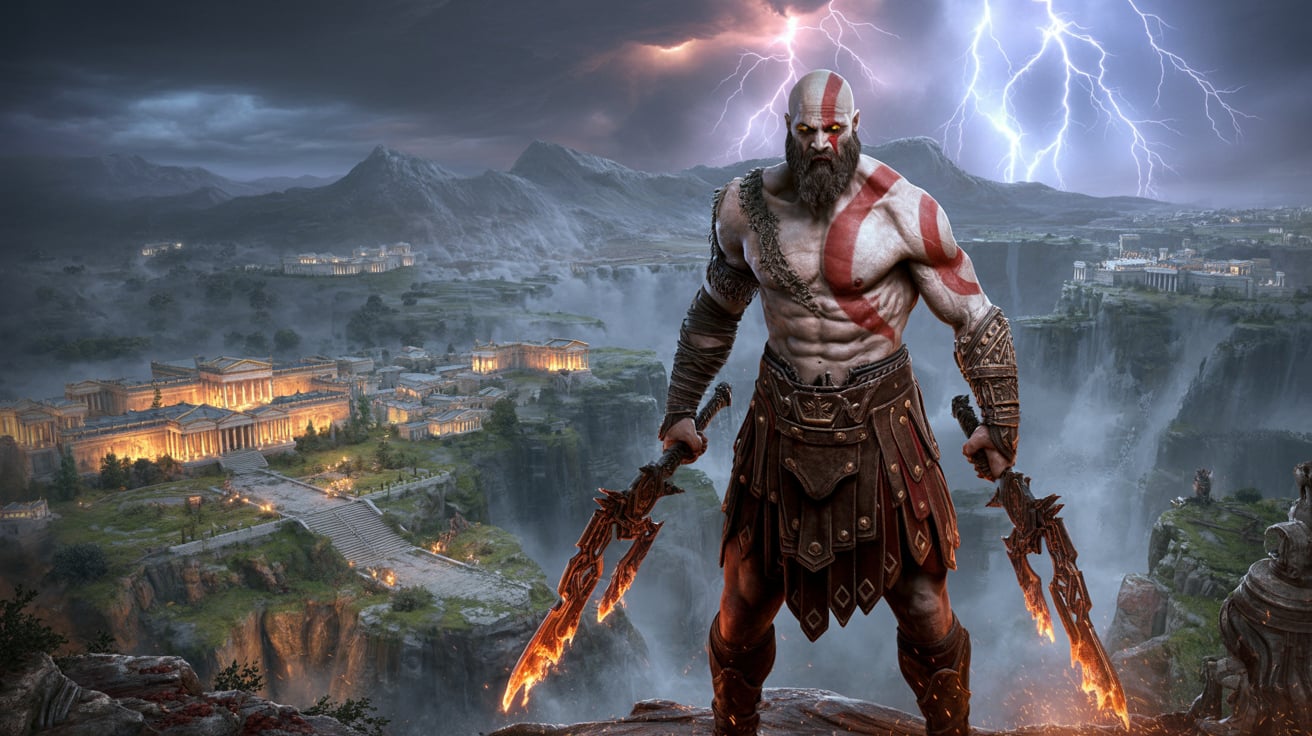
Introduction: A Legend Reawakens
When you hear the words “God of War,” your mind instantly travels to a decade of mythological rage, cinematic storytelling, and brutal combat. Kratos’ saga wasn’t just another gaming series—it was a revolution. The original God of War trilogy (2005–2010) shaped an era where Greek mythology met raw emotion and cutting-edge gameplay.
Now, almost 15 years later, the creator of God of War, David Jaffe, has officially praised a spiritual successor to his legendary trilogy — a game that he claims “captures the madness, myth, and muscle” of what made the originals unforgettable. This successor, titled “Ragnar Blade,” has set the internet ablaze after its new cinematic trailer dropped this week, sending fans and developers alike into a frenzy.
This article explores the full story behind this phenomenon — the origins of the original trilogy, Jaffe’s praise for the new project, what the trailer reveals, how it connects to the roots of God of War, and what this means for the future of action-adventure games.
1. The Legacy of the Original God of War Trilogy
The God of War trilogy (PS2–PS3 era) was a monumental force in gaming history. Released between 2005 and 2010, these games told the rise and fall of Kratos, a Spartan warrior consumed by vengeance against the gods of Olympus.
Each title pushed the PlayStation hardware to its limits, delivering jaw-dropping visuals, massive boss battles, and emotionally intense storytelling.
- God of War (2005) introduced Kratos’ tragic past, blending cinematic cutscenes with seamless gameplay.
- God of War II (2007) elevated the action, presenting gods like Zeus and Athena as both mentors and betrayers.
- God of War III (2010) culminated in the destruction of Olympus itself — an apocalyptic finale that solidified the franchise as a mythological masterpiece.
What made these games legendary wasn’t just the combat—it was the raw emotional tone. Kratos wasn’t a hero. He was rage personified, torn apart by guilt and betrayal. This darker storytelling set the tone for future titles across the gaming world.
2. The Birth of a Spiritual Successor: “Ragnar Blade”
The newly revealed project “Ragnar Blade” isn’t a reboot, sequel, or remake — it’s a spiritual successor crafted by a new studio called Titan Forge Interactive, led by several veteran developers from the God of War and Dante’s Inferno teams.
According to insider reports, Ragnar Blade explores Nordic-Mythic fusion, blending Scandinavian legends with original worldbuilding. Players take on the role of Varin, a cursed warrior reborn by an ancient forge god to prevent the unraveling of nine worlds.
David Jaffe, upon watching the trailer, commented:
“This feels like what God of War 4 could have been if we never rebooted. It’s got that classic brutality, cinematic madness, and scale that’s been missing. I’m genuinely impressed.”
That praise alone turned heads across the gaming industry.
3. The Trailer Breakdown: Myth, Blood, and Redemption
The Ragnar Blade trailer, revealed on YouTube and social platforms, runs for 3 minutes and 45 seconds — and it’s a rollercoaster from start to finish. Here’s what stood out:
Scene 1 – The Awakening
The trailer opens with Varin emerging from molten rock, gripping a broken sword fused with veins of light. His voiceover says, “The gods forged me to destroy… then forgot to unmake me.” It’s an instant callback to Kratos’ own tragic birth as a pawn of the gods.
Scene 2 – The World in Ruin
The camera pans across landscapes that blend Norse and Greek aesthetics — floating temples, frostbitten volcanoes, and colossal statues shattered by time. Fans immediately noticed the art direction evokes God of War II’s grand sense of scale.
Scene 3 – The Combat Reveal
Gameplay snippets show Varin wielding the Ragnar Blade, a transformable weapon that morphs between a sword, axe, and chain. Combos appear fluid yet weighty — much like God of War III’s Blades of Exile.
Scene 4 – The Gods Return
The trailer ends with a mysterious figure descending from the clouds, whispering: “The forge remembers you.” A clear tease for the game’s antagonist, rumored to be the god Haldr, the architect of divine weapons.
4. David Jaffe’s Reaction: “They Finally Got It Right”
After the trailer dropped, David Jaffe took to X (formerly Twitter) and YouTube to share his excitement. His reaction video, viewed over 1.2 million times in 48 hours, was filled with unfiltered enthusiasm.
He said:
“You can tell this team gets what made the OG trilogy special — the constant forward motion, the brutal pacing, the unflinching tone. It’s not about realism or emotional subtlety; it’s about mythic chaos. And this? This nails it.”
Jaffe’s endorsement carries enormous weight. Though he’s not affiliated with the project, his blessing feels symbolic — as though the creator of Kratos himself passed the torch to a new generation of mythmakers.
5. Fans React: Nostalgia and Excitement Collide
The Ragnar Blade trailer broke over 5 million views in three days. Fans flooded comment sections with comparisons to God of War II and III:
“This is the real successor we’ve been waiting for.”
“Finally, a return to pure chaos combat!”
“If Jaffe approves, I’m in.”
Reddit threads across r/Gaming, r/GodofWar, and r/PS5 buzzed with nostalgia. Memes emerged featuring Kratos “passing the blade” to Varin. Many praised the return of cinematic combat and mythic energy missing from recent minimalist reboots.
6. How “Ragnar Blade” Differs from God of War (2018–2022)
While Santa Monica Studio’s God of War (2018) and Ragnarök (2022) earned universal acclaim, they took a softer, more emotional route — Kratos as a father, dealing with regret and redemption.
By contrast, Ragnar Blade aims to bring back the ferocity of the original trilogy while introducing fresh lore. Its tone is less reflective and more mythic — focused on destiny, wrath, and divine rebellion.
Feature | God of War Reboot | Ragnar Blade |
Tone | Emotional & introspective | Mythic & violent |
Combat | Realistic, slow-paced | Fast, cinematic, chaotic |
Camera | Over-the-shoulder | Dynamic cinematic |
Setting | Norse mythology | Fusion of Norse + Original lore |
Theme | Fatherhood & loss | Vengeance & divine creation |
7. Gameplay Mechanics and Weapons
The developers confirmed several gameplay innovations:
- Weapon Morphing: The Ragnar Blade shifts form mid-combo, letting players chain attacks in creative ways.
- Divine Rage Mode: Similar to Kratos’ Spartan Rage, Varin channels “The Forge’s Fire,” unleashing devastating area attacks.
- Environmental Finishers: Players can use surroundings to slay foes — impaling enemies on broken spears, hurling them into lava, or shattering ice bridges.
- Cinematic Chains: Timed inputs trigger interactive cutscenes mid-battle, blending gameplay and cinematics seamlessly.
Early footage shows fluid camera motion, HDR particle effects, and zero load transitions — proof this is designed for next-gen consoles.
8. Themes and Story Direction
At its heart, Ragnar Blade explores creation versus destruction. Varin, forged as a weapon by gods, seeks to reclaim his free will. His journey mirrors Kratos’, but with a twist — he must forge his own destiny instead of breaking divine chains.
The story reportedly follows:
- Act I: Varin’s awakening and betrayal by the forge god Haldr.
- Act II: Journey through fractured realms to reclaim his memory.
- Act III: The forging of the “Eternal Blade” and the rebellion of mortals against gods.
Developers emphasize moral ambiguity — there’s no clear hero or villain, just gods and mortals bound by fate.
9. Developer Insights and Artistic Vision
In an interview with Game Informer, lead director Elena Voss said:
“We didn’t want to copy God of War. We wanted to continue its spirit — the grandeur, the myth, the weight of consequence. Varin is not Kratos, but he walks the same fire.”
The art team drew inspiration from Norse runestones, Greek architecture, and Celtic mysticism to craft a world that feels both ancient and alien. Each realm in Ragnar Blade reportedly has its own god-forge, influencing enemy design and terrain.
The soundtrack, composed by Bear McCreary’s former assistant, merges ancient drums with electric strings — an echo of past glory blended with modern flair.
10. The Return of Mythological Spectacle
One of the most defining aspects of the God of War trilogy was its epic scale — the feeling that every battle had the weight of a mythic event. Ragnar Blade embraces this same philosophy but magnifies it with next-generation technology.
The trailer showcases moments that feel like playable cinematic masterpieces. A few scenes have already become fan favorites:
- The Colossus Battle: A fiery titan, made of molten armor and chained by runic bindings, awakens as Varin climbs its back during a storm of ash. The transition from cutscene to gameplay is seamless — you can see every ember flicker on the warrior’s blade.
- The Forge Serpent Encounter: Deep within a realm known as “The Hollow Crucible,” a massive serpent forged from living steel emerges from a lake of liquid metal. It’s reminiscent of Poseidon’s Leviathan battle from God of War III, but more dynamic.
- The Celestial Bridge Collapse: In one breathtaking sequence, Varin sprints across a crumbling celestial bridge, fighting hordes of divine knights as lightning strikes in the background. The camera never cuts away — players remain immersed from start to finish.
Developers explained that these sequences are not just cinematic decoration — they’re interactive gameplay challenges, merging visual storytelling and player control. Every boss fight, chase, and puzzle is designed to maintain the rhythm of a mythic poem — grand, tragic, and intense.
Director Elena Voss stated in a developer diary:
“We wanted players to feel like every swing of the blade shapes the world around them. Gods fall, landscapes burn, and the music roars in harmony with your actions.”
This return to over-the-top mythological spectacle feels refreshing in an era dominated by grounded storytelling. It reintroduces the sense of awe that many gamers remember from the PS2 and PS3 eras — a time when every game tried to outdo itself in scale and imagination.
11. Industry Response and Comparisons
The gaming community isn’t the only group excited — industry professionals have taken notice too. Ragnar Blade’s debut trailer drew comparisons across several major outlets, and discussions about its potential filled gaming podcasts, YouTube channels, and developer forums within hours of release.
- IGN labeled it “a mythic resurrection of cinematic combat design.”
- GameSpot praised the “intense combination of gameplay and emotion rarely seen since God of War III.”
- Digital Foundry, after analyzing the trailer frame by frame, confirmed that the visual fidelity and dynamic particle rendering suggest an Unreal Engine 5 base, utilizing features like Lumen lighting and Nanite geometry to deliver unprecedented realism.
But the most notable reaction came from Cory Barlog, director of God of War (2018). On social media, he wrote:
“To see something so bold, so unashamedly mythic again — it reminds me why I fell in love with storytelling in games.”
His comment resonated with many players who felt that recent action games leaned too much on realism and emotional subtlety, losing that ancient-myth energy that made earlier titles legendary.
Meanwhile, Ragnar Blade’s developers responded humbly to the praise, stating that they were “deeply inspired by all who shaped mythological gaming before us.”
This respectful tone — acknowledging past creators while forging something new — has only increased anticipation. The gaming industry thrives on evolution, and Ragnar Blade seems to be evolving the mythic action genre rather than merely copying it.
12. Why the Praise Matters
David Jaffe’s endorsement of Ragnar Blade carries symbolic power far beyond a single quote. He isn’t just the creator of God of War — he’s the mind that redefined how violence, emotion, and cinematic design could coexist in a video game.
When Jaffe publicly praised Ragnar Blade, it wasn’t just nostalgia; it was recognition of artistic continuity. It validated the idea that mythological storytelling in games still has room to grow, even in a landscape dominated by open-world realism.
For years, fans of classic hack-and-slash games have felt that their favorite genre faded in favor of narrative-heavy, slow-paced titles. Ragnar Blade might represent the balance players have longed for — mythic energy with modern polish.
Jaffe’s words also highlight the cyclical nature of creativity. The generation that grew up playing God of War is now the one making Ragnar Blade. It’s a testament to how inspiration can transcend decades.
“It’s like passing the torch,” wrote one fan on Reddit. “Jaffe built the flame, Barlog expanded it, and now Titan Forge is making it burn brighter.”
This continuity between creators and fans reinforces why Ragnar Blade’s praise matters so deeply — it’s not just a new game; it’s the next chapter in an artistic lineage that began nearly 20 years ago.
13. Fan Theories and Speculation
The trailer has become a breeding ground for theories, dissected frame by frame by the gaming community. Fans have identified hidden runes, secret audio layers, and visual hints that could tie the story to deeper mythological concepts.
Theory 1: The Reforged Universe
Some fans believe Ragnar Blade takes place in a universe reborn after Ragnarok, where the gods attempted to restart creation but failed to remove echoes of the old world. The protagonist, Varin, could be a remnant of that failed divine project.
Theory 2: The Kratos Connection
Eagle-eyed viewers noticed a faint engraving on Varin’s chest armor resembling the letters “KR-TOS.” While likely an Easter egg, it sparked speculation that Ragnar Blade exists in a parallel mythic dimension shaped by the energy of fallen gods — perhaps even Kratos himself.
Theory 3: The True Nature of the Forge
The trailer repeatedly mentions “The Forge,” not just as a physical location but as a divine concept — a source of creation energy that binds gods and mortals. Fans theorize it’s the heart of reality itself, capable of rewriting existence. This would explain Varin’s mission “to unmake the makers.”
Developers neither confirmed nor denied these fan theories, simply replying:
“Every myth hides a truth, and every truth begins as myth.”
That mysterious tone has only amplified hype. For lore fans, this kind of cryptic storytelling brings back memories of uncovering God of War II’s hidden messages or solving in-game puzzles that hinted at future storylines.
14. The Future of Mythic Action Games
The impact of Ragnar Blade extends beyond nostalgia. If the game delivers on its promise, it could revitalize an entire genre.
Over the last decade, many action games shifted toward realism, survival, or stealth mechanics. The cinematic hack-and-slash spectacle — once a dominant genre — slowly faded. But the massive excitement around Ragnar Blade proves players still crave grand-scale, mythic adventures.
Industry experts predict a domino effect. Other studios may follow suit, exploring forgotten mythologies — Egyptian, Aztec, or even Mesopotamian — with modern engines and epic design philosophies.
Developers have already discussed potential expansions beyond the Norse-Greek fusion. Early concept art hints at portals leading to new pantheons, suggesting Ragnar Blade could evolve into a multiverse of myths, similar in ambition to what God of War III hinted at but never realized.
If Ragnar Blade succeeds critically and commercially, it could inspire a new era of myth-based storytelling, one that balances modern emotional realism with ancient, untamed fantasy.
15. The Human Element Behind the Gods
While Ragnar Blade focuses on divine battles and world-ending events, its emotional core remains human. Varin’s story isn’t just about revenge — it’s about identity, creation, and redemption.
As lead writer Kaya Linden explained:
“We wanted to explore what it means to be created for a purpose you didn’t choose. Varin isn’t trying to destroy gods — he’s trying to understand why they made him. That question drives everything.”
This emotional nuance parallels Kratos’ struggle in the original trilogy — not just to slay gods, but to confront his own purpose. In this way, Ragnar Blade isn’t a clone but an evolution of that theme. It’s myth reimagined for a modern generation that still seeks meaning in chaos.
16. Conclusion: Passing the Blade
As the trailer fades out, Varin’s voice echoes:
“A forge burns forever. Even if the gods fall, their fire remains.”
It’s a line that resonates beyond the story. For many fans, it symbolizes the unending cycle of inspiration — the forge that keeps gaming’s greatest legends alive.
David Jaffe’s praise for Ragnar Blade isn’t just an endorsement of one game. It’s a recognition that the spirit of the original God of War trilogy still lives on — not in name, but in the creativity it continues to ignite.
The mythic brutality, poetic storytelling, and cinematic ambition that once defined an era have returned, reforged for a new generation of gamers.
Whether Ragnar Blade becomes the next great franchise or simply a tribute to gaming’s golden age, it already represents something powerful.
The idea that legends don’t die — they evolve.
So, as fans prepare for its release and the industry watches closely, one thing is certain:
The forge of myth still burns, and its fire is brighter than ever.