 Ekasjot_Singh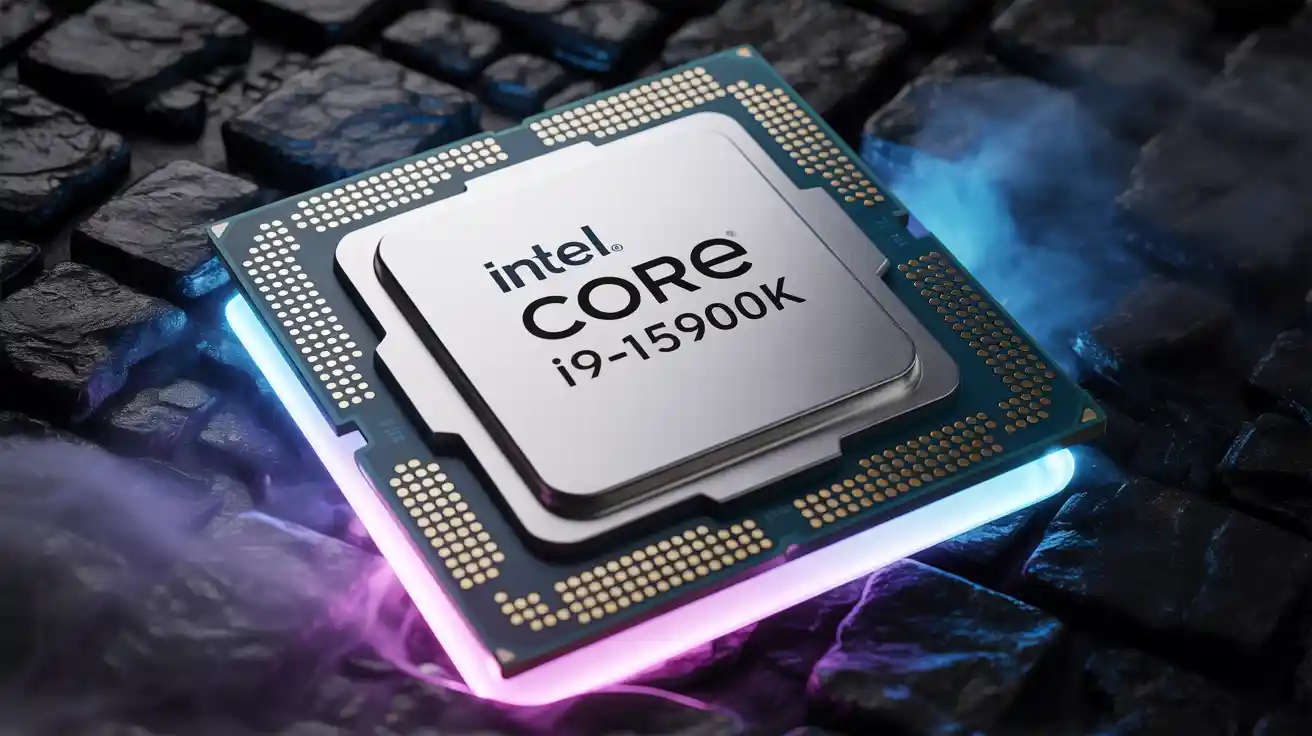
Introduction: A Surprise Leak That Shocked the Tech World
Intel is a name that defines the modern computing era. For decades, Intel processors have powered millions of laptops, desktops, and workstations across the world. Every new generation of Intel CPUs brings improvements in power, speed, and technology — and fans eagerly wait to see how the next flagship will perform.
Recently, however, something unusual happened. Intel’s upcoming Core i9-15900K processor, which is rumored to belong to the 15th-generation Arrow Lake family, appeared on the Geekbench 6 database without any official announcement from Intel.
This mysterious appearance caught everyone’s attention because of one major reason — the benchmark scores were shockingly low compared to expectations. Instead of outperforming the current Core i9-14900K, the new chip seemed to deliver underwhelming single-core and multi-core results.
The tech community instantly started buzzing with questions:
- Is Intel losing its edge?
- Are these results real or fake?
- Could this be an early engineering sample?
- And most importantly, what does this mean for the future of desktop CPUs?
Let’s explore everything about this strange leak — the specifications, benchmarks, technical reasons, community reactions, and what we can expect from Intel’s future lineup.
Section 1: The Background — Intel’s Legacy of Power and Performance
Before diving into the leak itself, it’s important to understand where Intel stands today.
Intel has been the leader of the desktop CPU market for decades. Their Core series — especially the Core i9 lineup — has always represented top-tier performance for gamers, developers, and professionals.
In recent years, however, AMD’s Ryzen processors have become powerful competitors. AMD’s Zen 5 architecture, found in the Ryzen 9000 series, has already delivered exceptional single-core and multi-core performance. This competition has forced Intel to innovate faster than ever.
The 14th-generation Raptor Lake Refresh series, led by the Core i9-14900K, offered great power but didn’t bring huge architectural changes. It was more of a refinement than a revolution. This is why the upcoming 15th-generation Arrow Lake is expected to be a major leap forward, introducing a brand-new architecture and manufacturing process.
Naturally, fans were expecting the Core i9-15900K to break records. But the leaked benchmark results tell a different story.
Section 2: What Exactly Is the Intel Core i9-15900K?
The Intel Core i9-15900K is rumored to be the flagship desktop CPU from the Arrow Lake-S lineup — Intel’s next-generation architecture.
Expected Key Features
- Architecture: Arrow Lake (15th Gen)
- Process Technology: Intel 20A (featuring RibbonFET and PowerVia)
- Cores/Threads: 24 Cores (8 Performance + 16 Efficiency) / 32 Threads
- Base Clock Speed: Around 3.2 GHz (estimated)
- Boost Clock Speed: Up to 6.0 GHz (estimated)
- Cache: 36 MB of L3 Cache
- Integrated GPU: Xe-LPG (Next-gen iGPU)
- Socket: LGA 1851
- Memory Support: DDR5 up to 6400 MHz
- TDP: 125W Base / up to 253W Boost
The new processor promises more power and efficiency, especially thanks to Intel’s upcoming 20A process node, which is designed to compete with TSMC’s 3nm node used by AMD and Apple.
Arrow Lake also introduces a modular design where CPU, GPU, and I/O components are separated into different tiles — similar to AMD’s chiplet design. This approach helps Intel improve manufacturing flexibility and power management.
On paper, the Core i9-15900K should easily outperform its predecessor. But when the Geekbench leak appeared, the numbers told a surprising story.
Section 3: The Geekbench Leak — What Happened?
The Core i9-15900K was spotted on Geekbench 6, a popular benchmarking tool that measures CPU performance in both single-core and multi-core workloads.
The leaked entry, believed to come from an engineering sample, showed the following results:
- Single-Core Score: ~2900
- Multi-Core Score: ~17000
To put this in perspective:
- The Core i9-14900K usually scores around 3100 (single-core) and 21000 (multi-core) on the same benchmark.
That means the upcoming i9-15900K — supposedly the next big thing — scored lower than its predecessor.
Naturally, this caused confusion and concern across the tech world.
Section 4: Why Are the Scores Underwhelming?
While the leak seems disappointing, several technical and logical explanations could explain why the scores are lower than expected.
1. Engineering Sample Limitations
Most likely, this leaked processor is an early engineering sample (ES) — a test version of the CPU that Intel uses for internal validation. ES chips often run at lower clock speeds, have disabled features, and lack optimized firmware, resulting in poor benchmark performance.
2. BIOS and Firmware Optimization
Arrow Lake introduces a completely new architecture, which means motherboard manufacturers must develop new BIOS updates to support it properly. Early test platforms often use unoptimized BIOS, leading to lower performance.
When the final retail version releases, optimized BIOS and microcode updates could easily improve performance by 10–25%.
3. Power and Thermal Management Changes
Intel might be experimenting with lower power limits to improve efficiency and thermals. The company could be prioritizing power savings over peak performance in early testing to find the right balance.
4. Benchmarking Environment
Geekbench scores can vary drastically depending on test conditions such as:
- Cooling setup
- RAM frequency
- Operating system
- Background processes
Without knowing these details, it’s impossible to judge the results accurately.
5. Disabled Features or Low Clock Speeds
Sometimes, early engineering chips don’t reach their final boost frequencies. If the sample was running below 6.0 GHz or lacked turbo functionality, the results would naturally appear weaker.
Section 5: Community Reactions — Shock, Memes, and Theories
The tech community never misses a beat when it comes to leaks. Within hours of the Geekbench entry being discovered, online forums like Reddit, Twitter (X), and Tom’s Hardware threads were filled with discussions.
Some users joked that Intel had “hit the brakes” too hard, while others suspected a fake leak or early test.
A few professionals reminded everyone that this happens every generation — early benchmarks rarely represent the final product.
Meanwhile, AMD enthusiasts were quick to point out that the Ryzen 9 9950X (based on Zen 5) already achieves.
- Single-Core: ~3300
- Multi-Core: ~23000
If these numbers hold, AMD could lead the performance charts once again when Arrow Lake launches.
Section 6: Intel’s Official Response (or Lack Thereof)
As expected, Intel has remained silent about the leak. The company never comments on unofficial benchmarks or engineering samples, and that’s standard practice.
However, silence often fuels speculation. Some analysts believe that Intel’s Arrow Lake desktop lineup might be delayed or undergoing last-minute architectural adjustments to fine-tune performance and power efficiency.
Others think Intel is strategically controlling leaks to keep attention away from AMD’s growing success in the desktop segment.
Section 7: Comparing i9-15900K vs i9-14900K
Let’s take a closer look at how the leaked Core i9-15900K compares with the current Core i9-14900K:
Feature | i9-15900K (Leaked) | i9-14900K (Official) |
Generation | 15th (Arrow Lake) | 14th (Raptor Lake Refresh) |
Process Node | Intel 20A | Intel 7 |
Cores / Threads | 24 / 32 | 24 / 32 |
Base Clock | ~3.2 GHz | 3.2 GHz |
Boost Clock | ~6.0 GHz | 6.0 GHz |
Single-Core Score | 2900 | 3100 |
Multi-Core Score | 17000 | 21000 |
Memory Support | DDR5-6400 | DDR5-5600 |
Socket | LGA 1851 | LGA 1700 |
Despite using a new node and architecture, the leaked performance doesn’t reflect any major improvement — at least not yet.
Section 8: The New Arrow Lake Architecture Explained
Intel’s Arrow Lake represents a complete redesign of its desktop processor lineup. Here’s what makes it special:
1. Intel 20A Node
This is Intel’s first major step into a new era of semiconductor manufacturing. The 20A (2nm-class) node introduces two breakthrough technologies:
- RibbonFET: A new type of transistor design that replaces FinFET, offering higher efficiency and speed.
- PowerVia: A backside power delivery system that allows faster communication between transistors and reduces energy loss.
2. Disaggregated Design (Tiles)
Arrow Lake will use separate tiles for CPU, GPU, and I/O — similar to AMD’s chiplet design. This allows Intel to mix and match tiles produced using different processes for flexibility and cost efficiency.
3. New Integrated GPU
The new Xe-LPG iGPU is expected to deliver major performance improvements for integrated graphics, making Arrow Lake CPUs more capable for light gaming and video workloads.
4. AI Acceleration (Intel AI Boost)
Intel plans to integrate dedicated AI accelerators to handle tasks such as image enhancement, voice recognition, and video editing — directly on the CPU. This aligns with Intel’s long-term strategy of pushing AI-powered computing.
Section 9: What It Means for Gamers and Creators
For gamers, benchmark numbers don’t always tell the whole story. What matters more is frame stability, power efficiency, and temperature control.
If Intel can deliver similar gaming performance to the 14900K while using less power and running cooler, that would be a big win.
For content creators, the built-in AI engines and improved iGPU could make tasks like 4K editing, rendering, and live streaming faster and smoother — even if the raw benchmark numbers look unimpressive for now.
Section 10: Possible Release Window
Based on Intel’s historical release cycle.
- Q2 2025: Arrow Lake laptop chips may launch first.
- Q3/Q4 2025: Desktop lineup (including i9-15900K) may follow.
This aligns with Intel’s roadmap to replace Raptor Lake Refresh by late 2025, introducing a new socket (LGA 1851) and platform for future CPUs.
Section 11: Intel vs AMD — The Battle Continues
AMD’s Ryzen 9000 series already looks strong with Zen 5’s advanced architecture and 3nm process.
If Intel doesn’t improve the i9-15900K’s performance before launch, AMD could dominate high-end desktops in 2025.
However, Intel’s strength lies in AI integration, platform stability, and better gaming optimization, which might still make Arrow Lake appealing for certain users.
Section 12: Should You Wait for the i9-15900K?
Here’s a simple decision chart:
Your Situation | What to Do |
Need a CPU today | Buy the i9-14900K or Ryzen 9 7950X |
Can wait 6–9 months | Wait for Arrow Lake’s final release |
Want maximum longevity | Wait for LGA 1851 and DDR5 platform |
Prioritize efficiency | Arrow Lake might be worth the wait |
Section 13: Future Outlook — What Intel Might Be Planning
Despite the disappointing leak, Intel likely has big plans for Arrow Lake and beyond.
The company’s roadmap includes:
- Lunar Lake for laptops (2025)
- Panther Lake (2026) — further refining the 20A process
- AI-first computing focus — integrating neural engines directly into CPUs
Intel’s long-term goal seems to be energy-efficient, AI-enhanced processors, not just raw power.
Conclusion: Don’t Judge Too Soon
The Intel Core i9-15900K’s mysterious appearance on Geekbench may have shocked the community, but it’s far too early to panic.
Early engineering samples rarely show real-world performance. Once final silicon, BIOS updates, and software optimizations arrive, we can expect significant improvements.
Intel is clearly moving toward a future where efficiency, AI acceleration, and smarter architecture matter more than just clock speed.
So while the scores are underwhelming for now, the final chapter of Arrow Lake’s story is still unwritten — and history shows that Intel often makes a strong comeback when it matters most.